
Iran vs Everybody
The World Cup and the Wages of Wartime Football

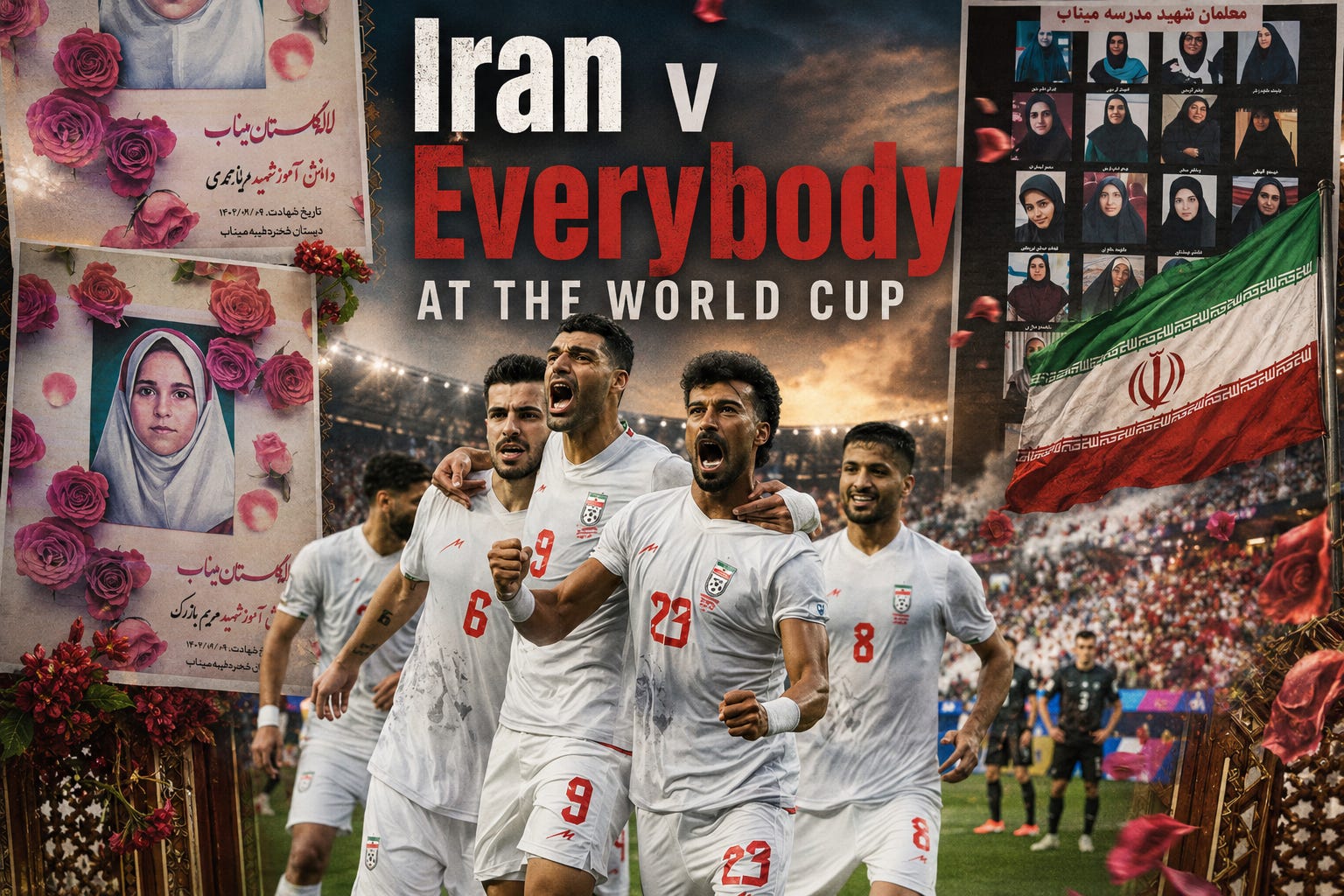
The Iranian players passed through the Mexican border checkpoint hours before their first World Cup match against New Zealand.
After facing off with American immigration agents, they boarded the bus and headed northbound, toward Los Angeles’ SoFi stadium: the site of their opening World Cup match.
Their competitors’ New Zealand arrived days earlier, free from the immigration orders and political scrutiny that fell on their shoulders. But for reasons beyond their control, this Iranian team were unlike any other team in the field.
Iran were not merely 1 of the 48 teams that qualified for the 2026 World Cup, but a side sidelined from the world’s greatest sports spectacle hosted by the United States – a nation at war with Iran.
While New Zealand stood as their athletic rival, the far more formidable opposition Iran would face were the president, the politicians, the media and marching legions that saw the Iranian government in the footballing men wearing the red and white jerseys. The weight placed on their shoulders came from outside and inside their nation, indicated by “168” pins bearing the memory of the schoolgirls killed in Minab by American airstrikes in February.
Despite their best efforts to focus on football, the Iranian players were political symbols for those who supported and reviled their government. They were stuck between these (and more) sides. Even before the thick of this war, the national team could not escape that straight-jacket, illustrating that sport offered no escape from the strife and script that surrounded them.
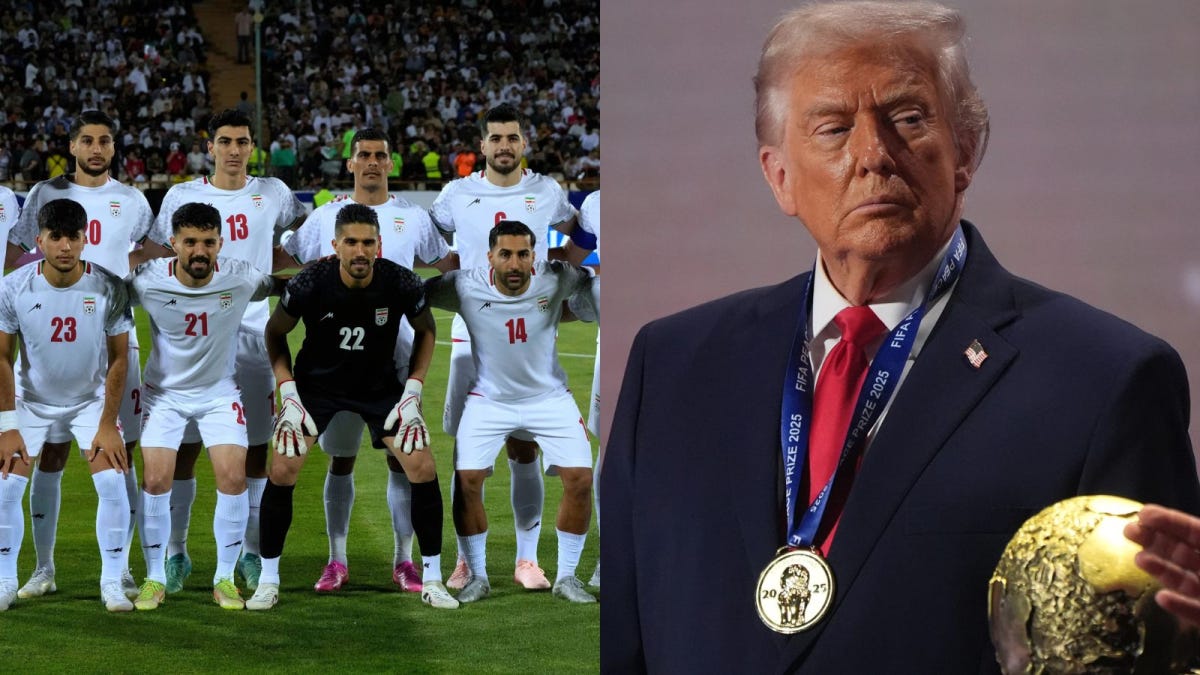
Still, they tried to break free from it. Team Melli’s talisman and captain, Mehdi Taremi, attempted to recapture the team’s image of national unity. He urged before the match,
“We, the players of the national team, we play for every Iranian, be it the Iranian diaspora or be it Iranians in the country. Look, in every country, people have different opinions, but we are here as footballers to unite people, and we will try to bring joy to all Iranians, irrespective of where they live. We do not get involved in politics. We are here to play football.”
Taremi’s words were emphatic and aspirational. But ultimately, elusive at an intersection when politics overwhelmed sport.
Playing in the World Cup during wartime, on the soil of the nation you are warring with, is extraordinary. Particularly when the opening match is taking place in a city, Los Angeles, home to the largest Iranian population, of which a considerable segment opposes the government and views the national team as an extension of it.
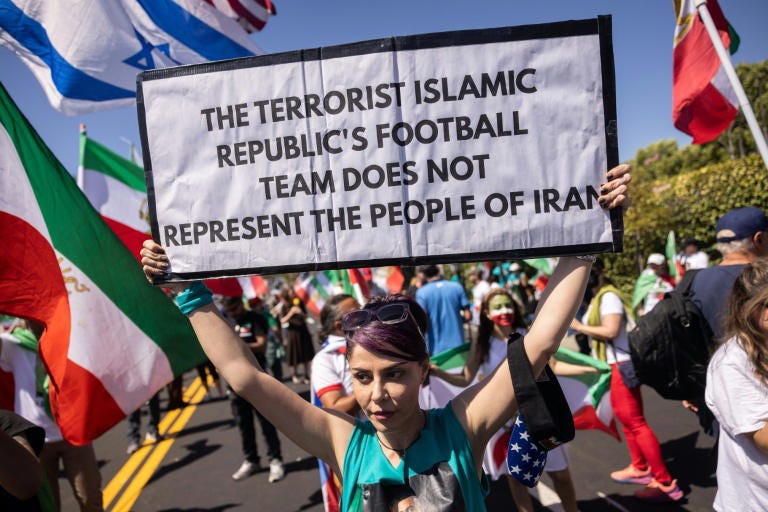
The Iranian team bus rolled into the stadium parking lot, greeted by opposition flags and signs that read, “This is not the national team of Iran.”
Days earlier, the U.S. government ruled that fans from Iran would not be admitted into the country to support their team. Hours earlier, several of the Iran’s coaches were denied visas and forced to remain in Mexico, splitting up the team and siloing it from its supporters.
For Iran, this was enemy territory. The intimidation from immigration agents, the Pahlavi flags and critical signs, the media scrutiny and presidential tweets, the American flag and orders to leave immediately after the match was over, screamed as such. Before the Iranian players could even think about the opposition on the pitch, New Zealand, they were forced to endure a field of rivals far more daunting.
Yet once the whistle blew, the politics that surrounded Iran gave way, if only briefly, to football. For ninety minutes, the question was no longer whether Iran could navigate border restrictions, visa denials, and political scrutiny. It was whether Team Melli could survive its opening test against New Zealand.
Iran’s 2-2 draw against New Zealand was more than a World Cup opener. It was a ninety-minute referendum on endurance, expectation, and survival. In a group already thrown wide open by Belgium and Egypt sharing points earlier in the day, the winner in Los Angeles would have seized immediate control of Group G. Instead, Iran and New Zealand delivered one of the tournament’s most dramatic early matches, a contest that ended level but felt anything but ordinary.
Twice Iran fell behind. Twice Iran answered.
The first response came through Ramin Rezaeian, whose early equalizer restored calm after New Zealand stunned the crowd with a seventh-minute opener from Elijah Just. Rezaeian’s goal was more than a finish; it was a declaration that Iran would not allow its World Cup ambitions to be derailed by the avalanche of scrutiny and suspicion coming its way.
Yet New Zealand struck again, and once more Iran found itself chasing the match. Enter Mohammad Mohebbi. In the 64th minute, the Iranian midfielder buried the equalizer, finishing a move that once again featured Rezaeian, who provided the assist. It was a goal born of persistence and belief, preserving a point that could prove invaluable when the group stage reaches its decisive final days.
The match ended in a tie. But considering the animus and opposition, distractions and directives to depart immediately after the match, proved a triumph for Iran. Team Melli could have easily folded.
But they fought and played together, chasing that illusion of national unity that eluded them off the field. And for ninety minutes in Los Angeles, succeeded in bringing together disparate segments of a people divided along political lines
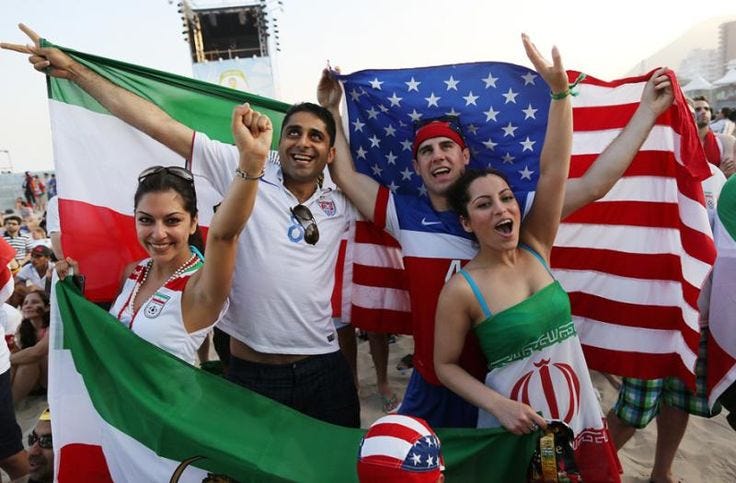
They boarded the bus back to Tijuana, leaving a country that had viewed them through a political lens long before they stepped onto the field. Again, forced to leave immediately after the match.
This draw was not merely a point in the standings. It was evidence of endurance. Twice Iran trailed. Twice it responded. And in a city where the team arrived carrying the weight of war, politics, and expectation, Team Melli left the field with something it had been denied long before kickoff: the opportunity to be judged, however briefly, on football alone.
Khaled A. Beydoun is a law professor and author. He is the author of the critically acclaimed book, American Islamophobia: Understanding the Roots and Rise of Fear, and the author of the forthcoming The Un/Beautiful Game: Power, Politics, and the World Cup, which will explore the intersection of racism, identity, and politics within the sport of football’s grandest tournament.
Stay Strong Iran! From Alaska
Best of luck Iran from Alaska. You already are winning. God speed your nation.